
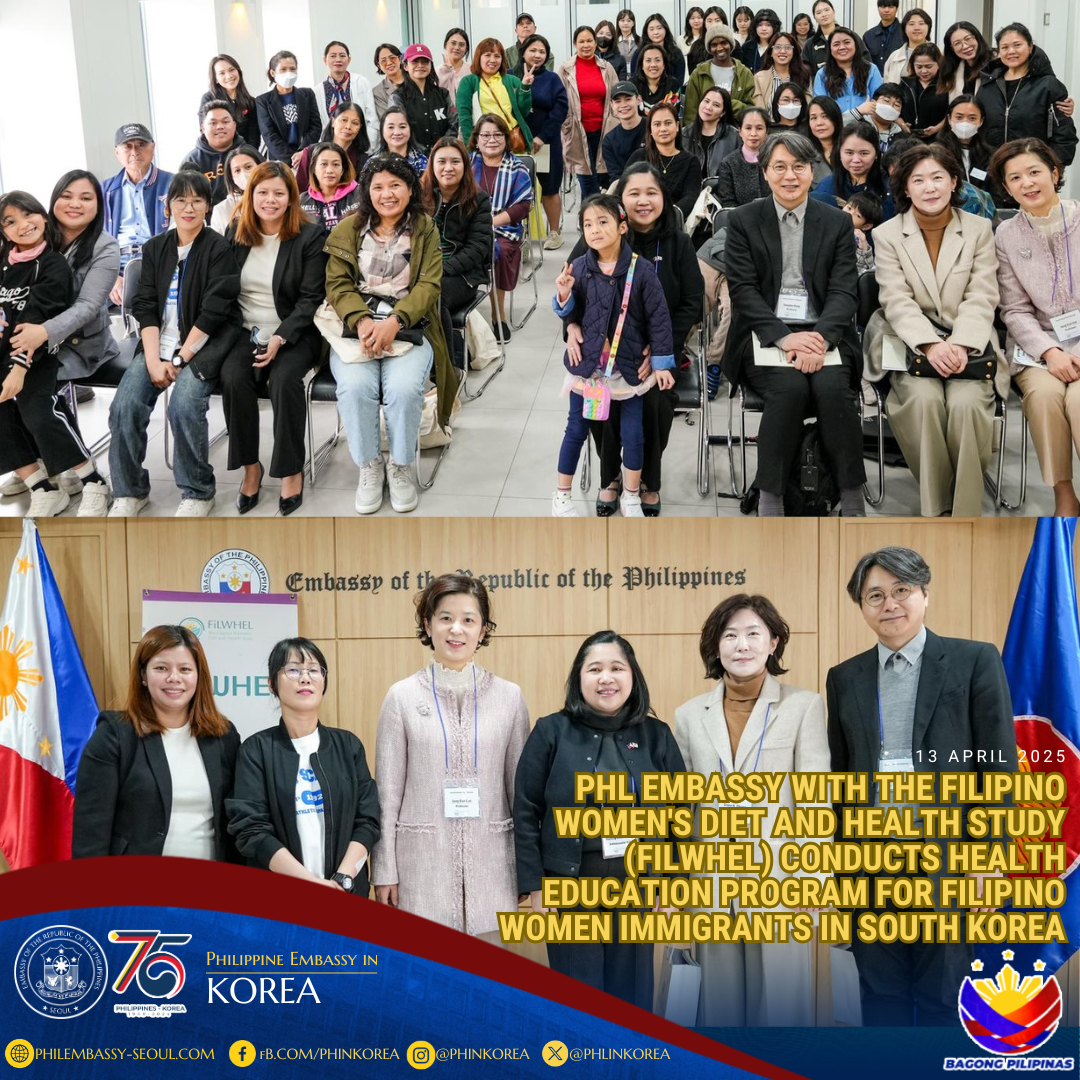
PHL EMBASSY WITH THE FILIPINO WOMEN'S DIET AND HEALTH STUDY (FILWHEL) CONDUCTS HEALTH EDUCATION PROGRAM FOR FILIPINO WOMEN IMMIGRANTS IN SOUTH KOREA
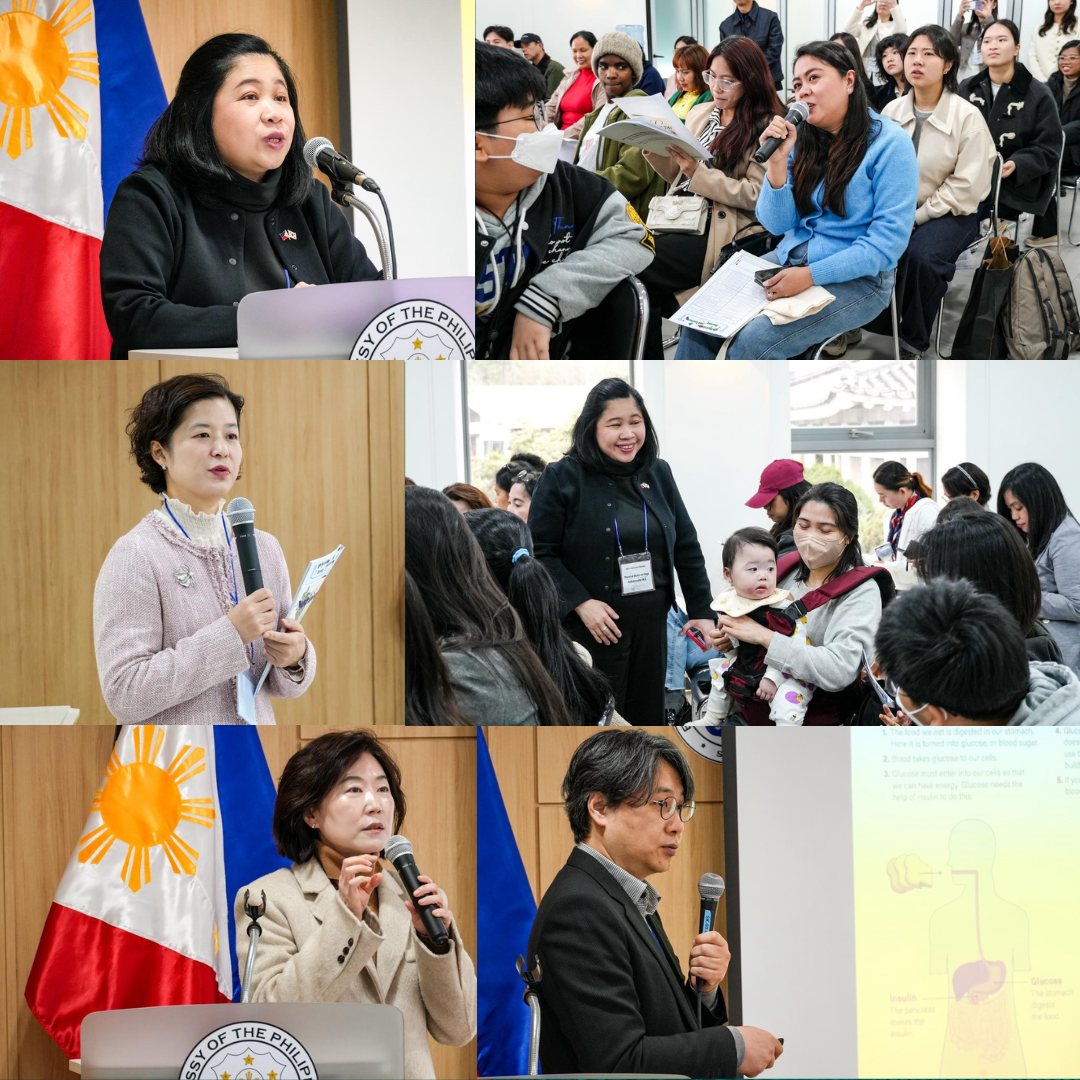
In her welcome remarks, Ambassador Theresa Dizon-De Vega highlighted the Embassy’s appreciation for its continued collaboration with FiLWHEL, and emphasized the importance of initiatives that address the unique health and wellness needs of Filipino women, particularly those in multicultural families. She noted that such women often navigate complex challenges arising from migration, acculturation, and caregiving, frequently at the cost of their own physical and mental well-being. She likewise underscored the value of cross-cultural dialogue and scientific collaboration in improving health outcomes and quality of life for migrant communities.
The program featured expert presentations from Dr. Sangmo Hong of Hanyoung University School of Medicine on “Understanding Diabetes”; Prof. Jung Eun Lee of Seoul National University (SNU) School of Nutrition on “Healthy Diets for Filipinos”; and Dr. Grace H. Chung of SNU’s Department of Child Development and Family Studies on “Raising Healthy Children and Adolescents in Multicultural Families.” The event was hosted by Dr. Sherlyn Mae P. Provido and supported by student researchers from SNU and other universities. Also in attendance were Vice Consul Jill De Dumo-Cornista and various women Filipino community leaders.
Attended by over 50 Filipino women immigrants in South Korea, the activity served as an initial orientation for a new group of participants to be engaged by FiLWHEL. The research team expressed its intent to expand outreach to Filipino women immigrants beyond Seoul and to continue providing health monitoring among prospective program participants.
The Embassy recognizes the significant value of the FiLWHEL study in generating research-based insights on the health and dietary patterns of Filipino immigrant women in Korea. For more information on the FiLWHEL program, please visit https://www.filwhel.org/home. END
 October 22, 2026
 October 20, 2026
 October 20, 2026